In a rapidly evolving world where internet access is pivotal to progress, India has introduced the PM WANI WiFi Scheme 2026 (Prime Minister Wi-Fi Access Network Interface) scheme, a groundbreaking initiative aimed at revolutionizing public WiFi access.
Launched in December 2020, this scheme is poised to provide affordable, easy-to-access, and high-speed internet connectivity for citizens across the nation, especially in underserved and rural areas. By 2026, the scheme has expanded exponentially, bringing India closer to its goal of becoming a digitally inclusive country.
What is PM WANI?
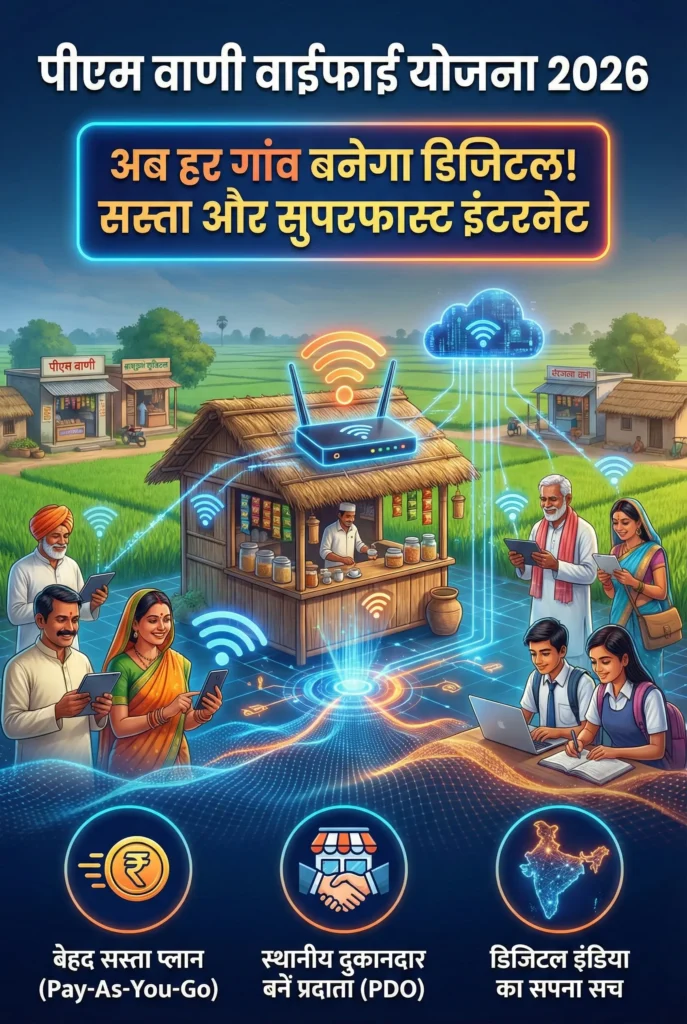
The PM WANI scheme is a public WiFi initiative designed to enable seamless internet access across India. Its main goal is to bridge the digital divide by providing internet services in public spaces through a decentralized network of WiFi hotspots. Unlike traditional models where telecom companies control internet access, PM WANI allows local entities, such as small businesses, tea stalls, and local entrepreneurs, to set up WiFi access points and offer affordable internet to the public.
The essence of the scheme is to enable local entrepreneurs to become Public Data Office Providers (PDOs), where they can set up WiFi networks in public areas and serve local communities without needing expensive telecom licenses. This decentralized model ensures that the cost of internet remains low, and service is spread across urban, semi-urban, and rural areas.
How Does the PM WANI Scheme Work?
The structure of PM WANI is built on a network of four key components:
- Public Data Offices (PDOs) – These are local businesses or entrepreneurs who set up the WiFi access points. They can range from tea shops, grocery stores, and even educational institutions.
- Public Data Office Aggregators (PDOAs) – These aggregators are entities that register PDOs and manage the billing and authentication system, ensuring a smooth operation of the network.
- App Providers – These are the platforms that users need to download to access the public WiFi. Through these apps, users can discover nearby WiFi hotspots, authenticate their connection, and choose their data plans.
- Central Registry – The central body that registers and verifies PDOs, PDOAs, and app providers, ensuring compliance and smooth network management.
When a person wishes to access the internet, they can use a WANI-compliant app to locate nearby WiFi hotspots, authenticate themselves, and select a data plan. The entire process is designed to be simple, with flexible payment options that allow users to pay for short-term internet access, ideal for those who don’t want to commit to long-term broadband plans.
You Can Also Read : Bihar Bhulekh 2026 Access Land Records
Expansion and Reach by 2026
Since its inception, the PM WANI scheme has seen significant growth. By 2026, millions of WiFi hotspots have been set up in various parts of the country, significantly enhancing internet accessibility, especially in rural and remote areas where traditional broadband infrastructure is often lacking. The decentralized nature of the network has allowed the initiative to scale rapidly without the need for huge investments in central infrastructure.
The expansion of this scheme has not only helped individuals access internet services at low cost but also empowered small business owners who have registered as PDOs. As more entrepreneurs join the initiative, the reach of PM WANI continues to grow, creating a robust ecosystem of affordable internet services that are helping bridge the urban-rural digital divide.
Affordable Connectivity for All
One of the most appealing aspects of the PM WANI initiative is its affordability. Traditional broadband and mobile data plans can often be expensive, especially for low-income groups. PM WANI offers a pay-as-you-go system, allowing users to access the internet on a short-term basis. This model is particularly helpful for students, small businesses, and individuals who do not need a constant internet connection but still want access to online resources when necessary.
Additionally, because the system is decentralized, the costs of deploying and maintaining the network are lower, which directly translates to lower prices for users. The scheme has made it possible for people to access the internet at a fraction of the cost of traditional internet plans, fostering greater inclusivity and promoting digital literacy across India.
You Can Also Read :Mahabhulekh Portal Guide
Benefits of the PM WANI Scheme
The PM WANI scheme holds numerous benefits for various sectors of society. Here are some of the key advantages:
- Digital Inclusion: The most significant impact of PM WANI is its role in reducing the digital divide. Rural and semi-urban populations, who previously had limited access to the internet, now have an affordable way to connect online, opening doors to education, job opportunities, and digital services.
- Boosting Local Entrepreneurship: By enabling local businesses to become PDOs, the scheme creates new economic opportunities for entrepreneurs. It also generates employment by requiring people to manage these local hotspots, helping communities benefit from digital growth.
- Affordable Internet for All: The affordable pricing structure, with pay-as-you-go options, ensures that more people can afford to access the internet, promoting equal opportunities in education, healthcare, and business development.
You Can Also Read : Aasara Pension Scheme
Challenges Facing the PM WANI Scheme
While the PM WANI scheme offers numerous benefits, it does face certain challenges. One of the biggest hurdles is the awareness and adoption of the scheme. Many potential PDOs and users may not fully understand how the system works or how they can participate. This gap in awareness can slow the growth of the initiative.
Another challenge is the issue of infrastructure. While PM WANI aims to make internet access available in remote areas, the lack of stable power supply and reliable backhaul internet connections can sometimes hamper the establishment of new WiFi hotspots. Furthermore, ensuring the security of public WiFi networks remains a concern, as unprotected networks may be vulnerable to cyber-attacks and misuse.
The Future of PM WANI
Looking forward to 2026 and beyond, the PM WANI scheme has the potential to transform India’s digital landscape. Continued expansion, improved awareness programs, and enhanced security measures can make this initiative a cornerstone of India’s digital infrastructure. As the internet becomes increasingly integral to modern life, PM WANI offers a promising solution to ensure that no one is left behind.
Conclusion
The PM WANI scheme is a transformative initiative that addresses India’s connectivity challenges head-on. By leveraging local entrepreneurship and decentralizing the WiFi infrastructure, the initiative has already made significant strides toward digital inclusion.
As the scheme continues to expand and evolve, it promises to provide affordable, accessible, and high-speed internet for millions of Indians, making the vision of a digitally empowered nation a reality. With continued support and development, PM WANI has the potential to redefine internet access across the country for years to come.